
One of the most magical milestones in early parenthood is hearing your baby laugh for the first time. That sudden burst of joy feels like a tiny window into their personality, connection and delight in the world around them.
While every baby develops at their own pace, laughter typically emerges during the first half of the first year. Before that, babies communicate through facial expressions, sounds and body movements that gradually become more social and interactive.

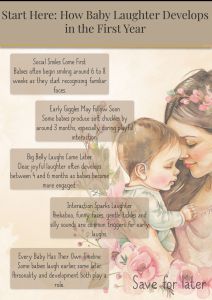
Social Smiles Come First
Before laughter, babies begin with smiles.
Around 6 to 8 weeks, many babies start giving intentional social smiles in response to familiar faces, voices and gentle interaction. These smiles are a sign that your baby is beginning to recognise you and engage socially.
This stage lays the foundation for later giggles and laughter.
Early Giggles May Follow
Some babies produce small chuckles or squeaky giggles as early as 3 months old. These sounds often happen during playful moments, especially when parents make exaggerated expressions or silly noises.
At this stage, laughter may be brief and unpredictable. Your baby is experimenting with new sounds and reactions.
Big Belly Laughs Develop Later
Between about 4 and 6 months, laughter often becomes clearer and more frequent. Babies at this age are more aware of their surroundings, more physically active and more responsive to interaction.
Common triggers include:
• peekaboo
• playful tickling
• bouncing games
• funny faces
• unexpected sounds
• repeated silly actions
These joyful responses show growing emotional connection and cognitive development.

Interaction Is the Key Ingredient
Babies rarely laugh in isolation. Laughter is deeply social.
Your voice, facial expressions, movement and responsiveness all help your baby learn that interaction is fun. When you repeat playful behaviours that made them smile, you reinforce this communication loop.
This back-and-forth exchange is also important for language development and bonding.
Every Baby Is Different
Some babies are naturally more serious, observant or sensitive, while others are quick to giggle. Personality plays a role alongside developmental timing. A baby who smiles, engages and responds socially but has not laughed yet is usually developing normally. If you ever have concerns about your baby’s development, your health visitor or GP can provide reassurance.
Enjoy the Moment When It Comes
The first laugh often arrives unexpectedly during an ordinary moment. Once it appears, you may find yourself doing the same silly thing over and over just to hear it again.
And that is completely understandable.
Laughter is not just a milestone. It is a sign of connection, joy and growing understanding of the world.