
The first year of your baby’s life is a period of extraordinary growth. In just twelve months, babies transform from completely dependent newborns into curious, mobile and interactive little people.
While milestones vary widely from baby to baby, they provide a helpful overview of how development typically unfolds.

Early Smiles and Social Connection
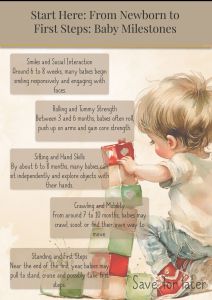
In the early weeks, babies begin responding to the world around them. Around 6 to 8 weeks, many babies offer social smiles in response to familiar faces and voices. They may track movement with their eyes and show increasing alertness during interaction.
These early connections form the foundation for emotional development.
Rolling and Building Strength
Between about 3 and 6 months, babies gain significant physical strength. They often learn to roll from tummy to back and later from back to tummy. During tummy time, they push up on their arms, lift their chest and develop the core muscles needed for future mobility.
This stage is all about building the body for movement.
Sitting and Exploring With Hands
By around 6 to 8 months, many babies can sit independently for short periods. Sitting frees their hands to explore toys, textures and objects more deliberately. Fine motor skills improve as babies pass items between hands, bang objects together and investigate everything within reach.
Curiosity really blossoms during this stage.
Crawling and Independent Movement
From about 7 to 10 months, babies often begin moving independently. Crawling styles vary widely. Some babies crawl on hands and knees, some commando crawl on their tummy, some scoot on their bottom and others roll to get where they want to go.
Mobility opens a whole new world of exploration and discovery.
Standing and First Steps
Toward the end of the first year, many babies pull themselves to standing using furniture. They may cruise along surfaces and experiment with balance. Some babies take their first independent steps before their first birthday, while others walk later. Both patterns can be completely normal.
Every Baby Develops at Their Own Pace
Milestones are guidelines rather than strict deadlines.
Some babies focus on physical skills first, others on social interaction or communication. Personality, environment and opportunities for practice all influence development. If you ever feel concerned, your health visitor or GP can provide reassurance.
Enjoy the Journey, Not Just the Milestones
It can be tempting to watch for the “next big skill,” but everyday moments are just as meaningful. Smiles, cuddles, curiosity and connection are all signs of healthy development, even if major milestones arrive later than expected.