
Sitting up independently is one of the most exciting milestones in the first year. It transforms how your baby sees and interacts with the world, freeing their hands for play and exploration.
Before babies can sit steadily on their own, they build strength and coordination through earlier movements such as tummy time, rolling and pushing up. Recognising these early signs can help you support your baby safely as they work toward this skill.
Strong Head Control
Good head control is essential for sitting. Your baby should be able to hold their head steady without it bobbing or falling forward when upright. During tummy time, you may notice them lifting their head confidently and looking around with ease. This strength provides the stability needed for balance when sitting.
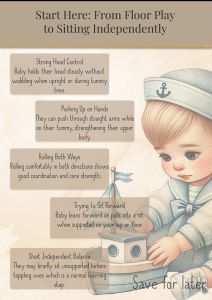
Pushing Up on Hands
Babies preparing to sit often push up on straight arms while lying on their tummy. This movement strengthens the shoulders, chest and upper body. You may also see your baby pivoting in a circle or reaching for toys while supported on their hands. These actions build the coordination required for upright balance.
Rolling Both Ways
Comfortable rolling in both directions is a strong indicator of core strength. Rolling requires coordination between the upper and lower body, as well as control over weight shifting.
Babies who can roll easily are usually developing the muscles needed to stabilise themselves in a seated position.

Trying to Sit Forward
When placed on your lap or supported on the floor, your baby may lean forward, push against your hands or attempt to pull themselves upright. Some babies prop themselves on their hands in a tripod position.
These attempts show growing awareness of balance and body positioning.
Brief Independent Balance
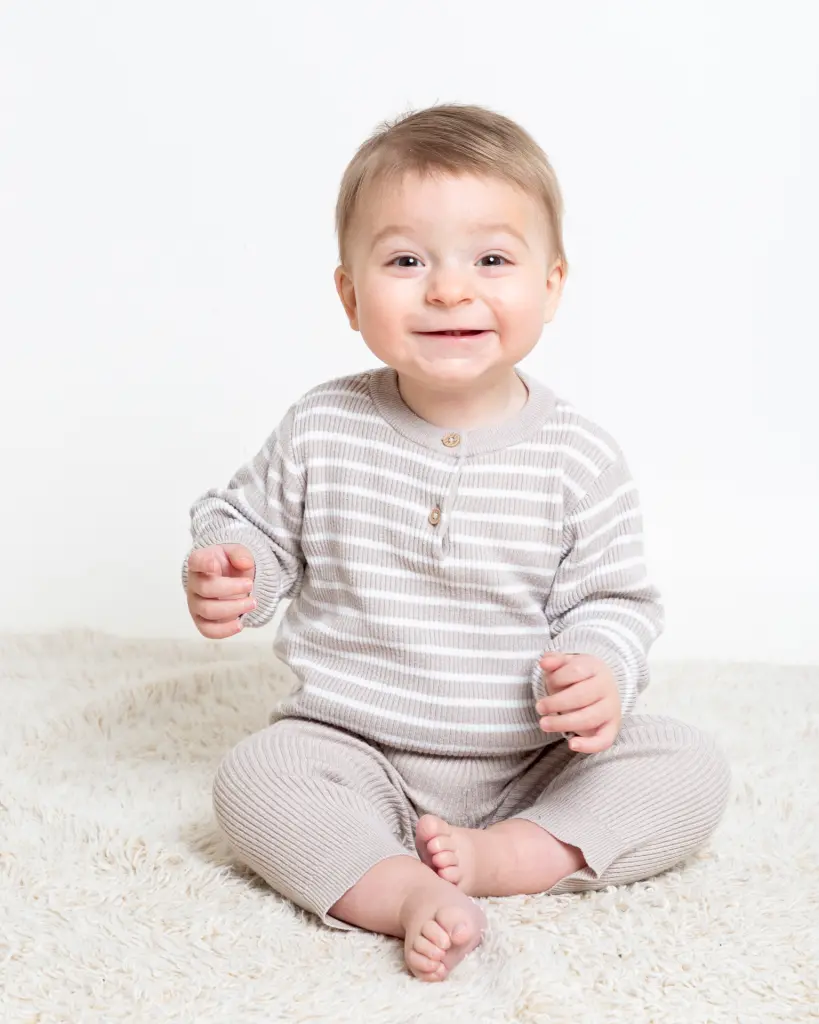
Before sitting steadily, many babies manage a few seconds of independent sitting before tipping sideways or forward. This wobbling stage is completely normal and helps them learn how to adjust their posture. Providing a soft, safe surface allows them to practise without fear of injury.
How to Support Sitting Safely
Floor time is the best environment for learning. Allow your baby to move freely on a firm surface rather than relying heavily on supportive devices. You can sit behind them for reassurance or place toys slightly out of reach to encourage upright balance and controlled movement. Once your baby can sit independently, supervision is still important as they may topple unexpectedly.
Every Baby Develops at Their Own Pace
Some babies sit as early as five months, while others take longer. Variation is normal, and progress happens gradually rather than overnight. Watching your baby discover this new ability is a joyful milestone. Sitting opens the door to new play opportunities, social interaction and independence.