
Play is one of the main ways babies learn about the world. Although it may not always look like traditional play, every interaction helps build physical, cognitive and social skills.
During the first year, play evolves dramatically as babies gain strength, coordination and awareness of their surroundings.
Newborn Play Is Sensory and Simple
In the earliest weeks, babies are still adjusting to life outside the womb. Their play consists mainly of sensory experiences. Eye contact, gentle talking, singing and skin to skin contact are deeply engaging for newborns. They may watch faces closely, respond to familiar voices and enjoy being rocked or held.
At this stage, play is less about toys and more about connection.
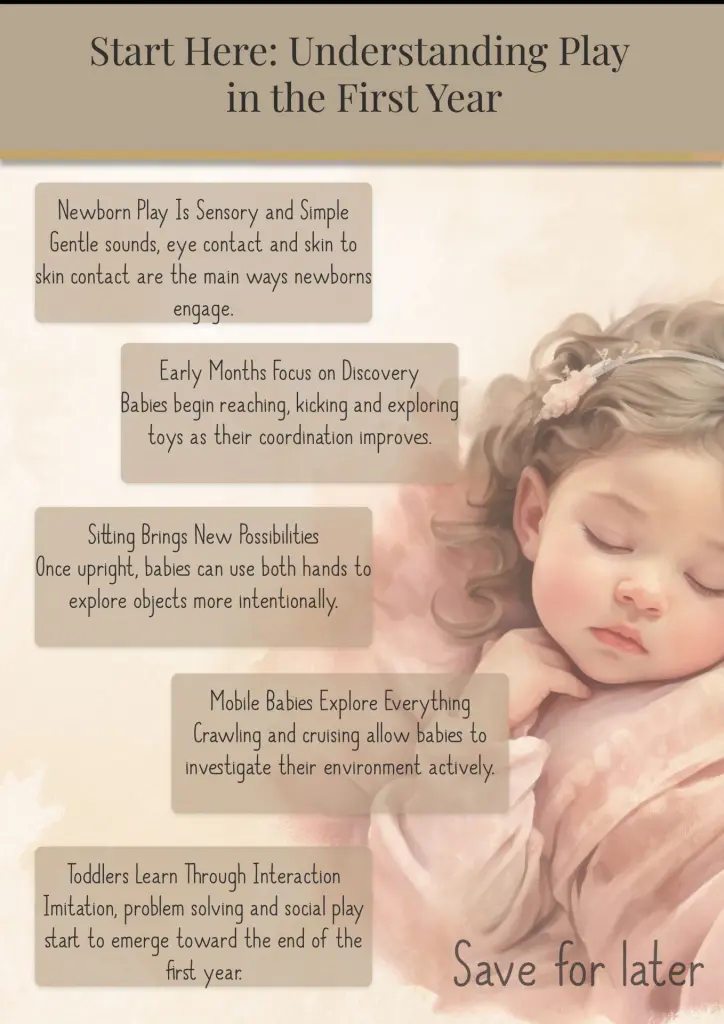
Early Months Focus on Discovery
As babies become more alert, they begin to explore their bodies and surroundings. Kicking, waving arms, tracking moving objects and grasping toys are common activities. Simple toys with contrasting colours, soft textures or gentle sounds become interesting.
Tummy time also becomes an important form of play, strengthening muscles needed for later movement.
Sitting Opens New Opportunities
Once babies can sit with support or independently, their play becomes more hands on. Being upright frees both hands, allowing babies to pick up objects, transfer items between hands and explore different textures. They may enjoy stacking toys, banging objects together or examining items closely.
This stage marks a shift from passive observation to intentional interaction.

Mobility Changes Everything
When babies learn to crawl, shuffle or cruise, their world expands dramatically. Instead of waiting for objects to be brought to them, mobile babies actively seek out new experiences. They may open drawers, pull themselves up on furniture or chase moving toys.
Exploration becomes energetic and curiosity driven, supporting problem solving and spatial awareness.
Emerging Social and Interactive Play
Toward the end of the first year, babies begin to engage in more social forms of play. They may imitate actions, respond to simple games like peekaboo and show preferences for certain toys or activities. Cause and effect toys, books and interactive play with caregivers become especially appealing.
This stage lays the foundation for communication, imagination and cooperative play in toddlerhood.
Every Stage Matters
Although play looks very different from month to month, each stage builds essential skills. Quiet sensory engagement, physical exploration and social interaction all contribute to development. There is no need for elaborate toys or structured activities. Responsive interaction and safe opportunities to explore are what matter most.
By following your baby’s interests and abilities, you naturally support their growth.