
During the first year of life, babies grow and change faster than at any other time. New skills appear gradually, often building on earlier abilities in ways that can feel both exciting and surprising.
While every baby develops at their own pace, understanding the general progression of milestones can help parents feel more confident about what is typical and what may be coming next.

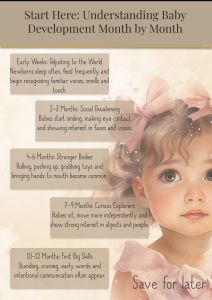
Early Weeks: Adjusting to the World
In the newborn stage, babies are adapting to life outside the womb. Much of their time is spent sleeping, feeding and being held. During this period, babies begin recognising familiar voices, smells and touch. They may briefly focus on faces and respond to sounds, especially the voices of parents and caregivers.
This stage lays the foundation for later social and emotional development.
Watching people and movement
One of the first ways babies explore the world is by watching the people around them.
Babies are naturally drawn to faces and expressions. They often study parents and caregivers closely, observing movements, smiles and eye contact.
They also notice movement in their environment, such as:
• hands moving in front of them
• toys gently swaying
• light and shadow shifting across the room
Following movement with their eyes helps babies develop visual tracking and attention skills.
2–3 Months: Social Awakening
Around two to three months, babies often begin to engage more actively with the world around them.
Social smiles appear, eye contact becomes more sustained, and babies may coo or make simple sounds in response to voices. They also begin tracking movement with their eyes and showing clear interest in faces.
This is often when parents feel their baby is becoming more interactive and responsive.
4–6 Months: Stronger Bodies
As muscles strengthen, babies start gaining better control over their movements.
Rolling from tummy to back or back to tummy becomes common. Babies push up during tummy time, grasp toys intentionally and frequently bring hands or objects to their mouth as part of exploration.
This stage marks the transition from passive observation to active engagement.
7–9 Months: Curious Explorers
During the middle of the first year, babies often become much more mobile and curious. Many learn to sit independently, pivot on the floor or begin crawling. They explore objects more deliberately and show strong interest in people, interactions and cause-and-effect play. Separation awareness may also increase during this time, reflecting growing attachment to caregivers.
10–12 Months: First Big Skills
Toward the end of the first year, babies begin preparing for toddlerhood. Pulling to stand, cruising along furniture and even early independent steps may appear. Communication becomes more intentional, with gestures, pointing, simple words or sounds used to express needs and interests. This stage reflects a combination of physical, cognitive and social development coming together.
Every Baby Develops Differently
Milestones provide a helpful framework, but they are not strict deadlines. Some babies focus first on movement, others on communication, and many move through stages at slightly different times.
What matters most is gradual progress and engagement with the world around them.
Understanding these stages can help parents support development while also appreciating just how much learning is happening during this remarkable first year.