
The first year of life is a period of extraordinary growth. Although babies may appear small and dependent, they are constantly absorbing information and building the foundations for future skills.
Long before they can walk or talk, babies are learning how their bodies work, how to communicate and how the world around them behaves.

Movement and Body Control
One of the most visible areas of development during the first year is physical movement.
Babies gradually strengthen their muscles and coordination, progressing from lifting their head to rolling, sitting, crawling and eventually standing. Each stage builds on the previous one, allowing babies to explore their surroundings more independently.
Movement also supports brain development, as physical exploration helps babies learn about space, balance and cause and effect.
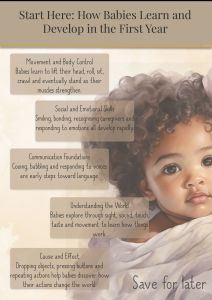
Social and Emotional Skills
From the earliest weeks, babies are forming strong emotional connections with their caregivers.
They learn to recognise familiar faces, respond to smiles and seek comfort when upset. Over time, babies begin to show preferences for certain people and may experience separation anxiety as their attachment deepens.
These early relationships form the foundation for trust, emotional regulation and later social skills.
Communication Foundations
Even before words appear, babies are developing the building blocks of language.
Cooing, babbling and responding to voices help babies practise the sounds and rhythms of speech. They learn that communication is a two-way process, where sounds and expressions lead to responses from others.
Gestures such as reaching, pointing or raising arms to be picked up also become important ways for babies to express needs and intentions.

Understanding the World Through the Senses
Babies experience the world primarily through their senses.
They watch faces, track movement, respond to sounds, explore textures and often bring objects to their mouth. This sensory exploration helps them understand differences between objects, recognise patterns and develop curiosity.
Everyday experiences such as being held, listening to voices or playing with simple toys all contribute to this learning process.
Cause and Effect
One of the most fascinating discoveries babies make is that their actions can change what happens around them.
Dropping objects, banging toys or pressing buttons repeatedly allows babies to see predictable results. This repetition is not random behaviour. It is active experimentation and learning.
Understanding cause and effect lays the groundwork for problem solving, independence and purposeful play later on.
A Foundation for Everything That Follows
Although the first year may feel like a blur of feeding, sleeping and daily routines, it is actually one of the most important periods of development.
Babies are learning how to move, communicate, connect with others and understand their environment. These early skills form the base for walking, talking, learning and social interaction in the years ahead.
Every small milestone is part of a much larger process of growth.