
Many babies become mesmerised by lamps, windows or patches of sunlight. This behaviour can look mysterious, but it is usually a reflection of how the visual system develops during infancy.
Lights offer exactly the kind of stimulation a young brain craves.

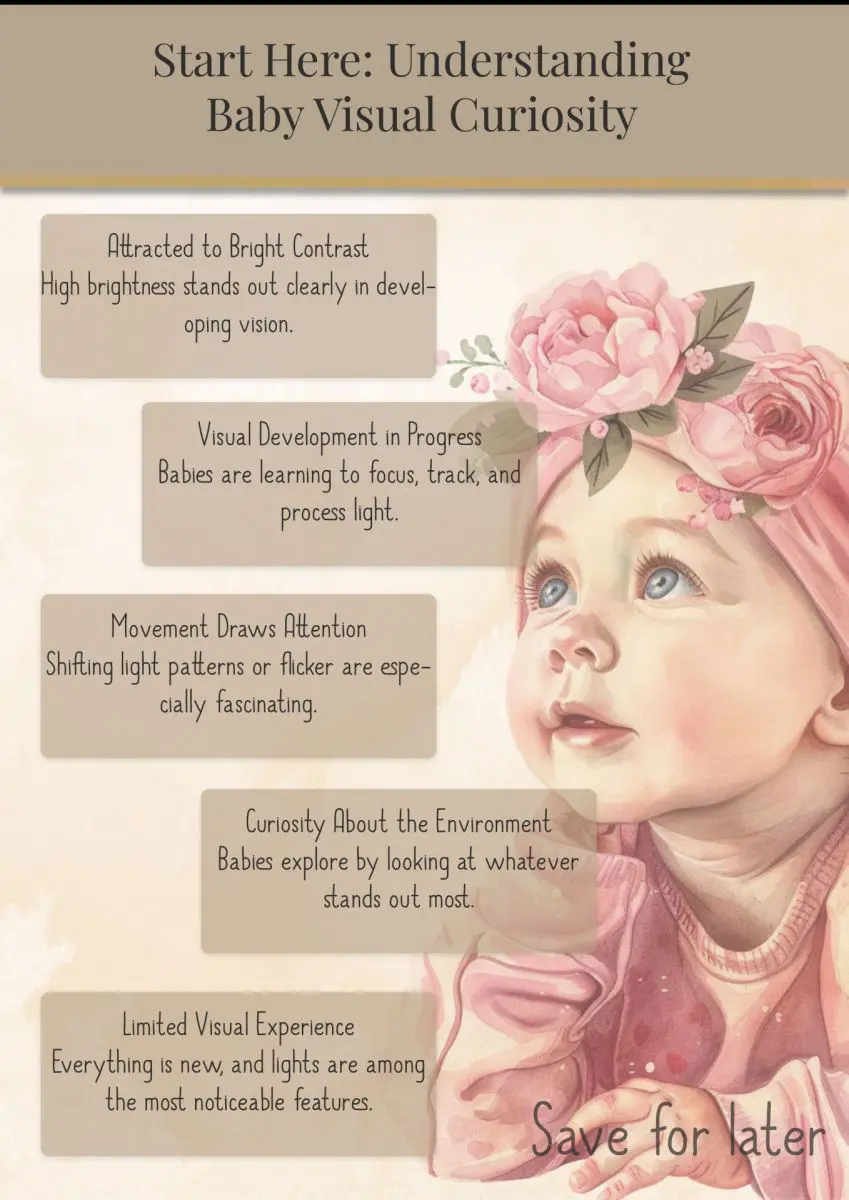
High contrast attracts attention
Newborn vision is still blurry. Bright lights against darker surroundings create strong contrast, which is easier for babies to detect. Light sources stand out clearly, making them natural focal points.
Tracking movement and change
Light often shifts subtly – through flicker, shadow or movement across surfaces. These changes help babies practise visual tracking. Watching moving light strengthens the ability to follow objects with the eyes, an essential skill for later coordination and reading.
Exploring depth and space
Reflections and light patterns provide clues about distance and shape. Babies gradually learn how their environment is structured by observing how light behaves on surfaces. Sunlight through curtains, for example, creates soft movement and shadow that invites prolonged attention.

Calming sensory input
Some babies find steady light soothing, especially when overstimulated. Gentle visual focus can help them regulate their nervous system. However, very bright or flashing lights can be overwhelming, so balance is important.
Supporting healthy visual development
You can encourage visual skills safely by offering a variety of sights:
• natural daylight
• soft shadows
• high-contrast toys
• faces and expressions
• simple patterns
Human faces remain the most valuable visual input of all.
A window into a developing brain
Staring at lights is usually just another way babies explore their world through their senses. As vision sharpens and attention expands, they will shift focus to people, objects and movement around them. For now, those quiet moments of fascination are part of building the visual foundations they will use for the rest of their lives.