
Those rapid, enthusiastic leg kicks are one of the clearest signs of baby joy. When babies cannot yet crawl, walk or jump, kicking becomes a powerful way to express emotion and release energy.
Far from random movement, excited kicking is a meaningful developmental behaviour.
Expressing big feelings with the body
Babies experience strong emotions but have limited ways to communicate them. Movement becomes their language. Leg kicking often signals:
• excitement
• anticipation
• happiness
• frustration
• sensory overload
Because their nervous system is still maturing, physical expression can be intense and sudden.
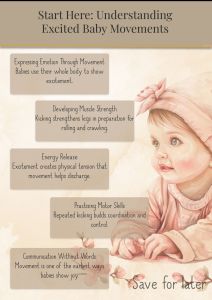
Building strength for future movement
Repeated kicking strengthens the muscles needed for rolling, crawling and eventually walking. Even playful kicking during excitement contributes to:
• core strength
• coordination
• joint mobility
• awareness of body position
What looks like random flailing is actually practice for major milestones.
Discovering cause and effect
Babies notice that kicking makes things happen. It may rock a chair, bounce a toy or produce a sound. This reinforces the idea that their body can influence their environment, encouraging more purposeful movement over time.

Releasing pent-up energy
Periods of stimulation build energy in the body. Kicking helps discharge that energy safely. You might see it when:
• you approach after being away
• a favourite toy appears
• music starts playing
• they are about to be picked up
It is essentially the baby version of jumping up and down with excitement.
Supporting healthy movement
Allow safe opportunities for free kicking, such as:
• supervised time on the floor
• play mats with room to move
• loose clothing that does not restrict legs
Restrictive seats or devices limit these natural movements, so balance them with plenty of floor time.
Joy in motion
Excited kicking is a beautiful sign that your baby feels engaged and stimulated. It shows their brain and body are working together to process emotion and prepare for the next stage of physical development.