
Many parents notice a pattern where their baby seems relatively content during the day but becomes unsettled as evening approaches. This phase is sometimes called the “witching hour” and is extremely common in the early months.
Although it can feel worrying, evening crying usually has understandable causes.

Overtiredness Builds Throughout the Day
Babies have limited stamina for stimulation. By late afternoon or evening, they may simply be exhausted from a full day of activity, even if they have napped.
Overtired babies often struggle to settle and may cry more intensely.
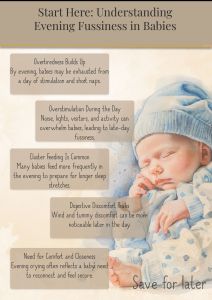
Overstimulation
Busy environments, bright lights, loud noises, and multiple interactions can overwhelm a baby’s developing nervous system.
Even positive experiences can become too much by the end of the day.
Cluster Feeding
Many babies feed more frequently in the evening. This behaviour helps increase milk supply and prepares them for longer stretches of sleep overnight.
Frequent feeding can coincide with fussiness, making it seem as though nothing is helping.

Digestive Discomfort
Wind, reflux, or general digestive immaturity may be more noticeable when babies are tired. Lying down after feeds can sometimes make discomfort worse.
A Need for Comfort and Connection
After hours of stimulation and separation, babies often seek closeness with their caregiver. Holding, rocking, and quiet interaction can help them feel secure again.
It Usually Gets Better
Evening fussiness often peaks around six to eight weeks and gradually improves over time. While it can feel endless in the moment, this stage does pass.
When to Seek Advice
If crying is unusually intense, persistent, or accompanied by other concerning symptoms such as fever or feeding difficulties, it is always appropriate to consult a healthcare professional.