
Many parents notice how intensely babies study faces, especially in the early months. This steady gaze can feel surprisingly meaningful, and in many ways it is.
Faces provide some of the most important information a baby can receive.

Faces Are Easy to See
Newborn vision is still developing, and babies see best at close range. High contrast features such as dark eyes, eyebrows, and hair stand out clearly, making faces visually engaging.
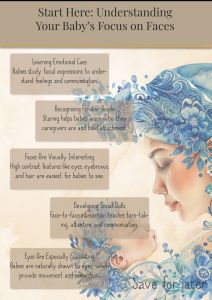
Learning About Emotions
Babies watch facial expressions to understand feelings. Smiles, raised eyebrows, and changes in expression help them learn how communication works.
This process lays the foundation for social development.
Recognising Familiar People
Staring helps babies identify the people who care for them. Over time, they begin to distinguish familiar faces from strangers, strengthening attachment bonds.

Exploration is not simply play. It is one of the main ways babies build important developmental skills.
Watching, listening and touching all contribute to:
• sensory development
• early problem solving
• coordination and movement
• language and communication skills
Developing Communication Skills
Face-to-face interaction teaches babies important skills such as eye contact, attention, and turn-taking. These early exchanges are the building blocks of language and social interaction.
Eyes Capture Attention
Human eyes provide movement, contrast, and emotional information all at once. Babies are particularly drawn to them because they offer connection and feedback.
More Than Just Looking
When your baby studies your face, they are not simply observing. They are learning about safety, communication, and relationships.
These moments of connection are an essential part of development.