
Teething is one of the biggest developmental milestones of early childhood, but it rarely follows an exact schedule. While there are typical patterns, every baby develops at their own pace.
Understanding the general timeline can help you recognise what is normal and when extra support may be needed.

Teething Can Start Before Teeth Appear
Many babies begin showing signs of teething months before a tooth actually emerges. Drooling, chewing, irritability, and disrupted sleep can all happen as teeth move beneath the gums. These early symptoms often start around three to four months.
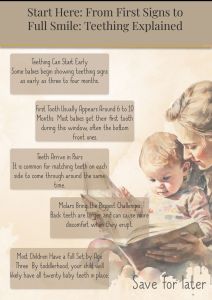
First Tooth: Usually Between 6 and 10 Months
Most babies get their first visible tooth sometime between six and ten months old. The bottom front teeth are usually the first to appear. Some babies cut teeth earlier, while others may not get their first tooth until after their first birthday.
Teeth Often Arrive in Pairs
After the first tooth, others typically follow in a predictable pattern. Matching teeth on the opposite side of the mouth often erupt close together. This can mean periods of intense discomfort followed by calmer stretches.
Molars Can Be the Most Difficult
The large back teeth, known as molars, tend to cause more discomfort when they come through because of their size and surface area. These usually appear in the second year of life.
A Full Set by Around Age Three
Most children have all twenty baby teeth by the time they are about three years old. After this stage, teething discomfort usually fades until permanent teeth begin to replace them later in childhood.
Some babies breeze through teething with minimal fuss, while others experience prolonged discomfort. Both experiences can be completely normal. If your baby seems unusually distressed or develops a high fever, it is always wise to consult a healthcare professional.
Baby Photography
You can book a stand alone baby photo shoot for £95 including three digital images or you can take a look at my Baby Photography Club which includes
- Sessions at 4, 8 and 12 months
- The last session as a cake smash / tub splash if you’d like it (no extra charge)
- Your favourite image from each session in a wall frame at the end of the year OR a free digital image from each session
- Online private image gallery after each session (no sales / viewing appointments)
- £39.95 for the sessions and the wall frame