
All babies become unsettled at times. Fussiness can appear suddenly and may not always have an obvious cause, which can feel stressful for parents.
The good news is that simple, gentle strategies often work best.

Check Basic Needs First
Many episodes of fussiness have straightforward explanations. Hunger, tiredness, trapped wind, discomfort, or a wet nappy are common triggers. Running through these possibilities can often resolve the issue quickly.
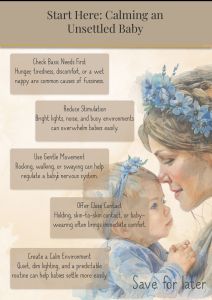
Reduce Stimulation
Babies can become overwhelmed by noise, bright lights, or busy environments. Moving to a quieter space with dim lighting can help their nervous system settle.
This is especially important toward the end of the day when babies are more sensitive.
Use Gentle Movement
Rhythmic movement is deeply calming for many babies. Rocking, walking, or swaying mimics the motion they experienced before birth and can help regulate their breathing and heart rate.

Offer Close Contact
Physical closeness provides reassurance and security. Holding your baby, skin-to-skin contact, or using a sling can help them feel safe and supported.
For some babies, simply being near a caregiver is the most powerful calming tool.
Create a Calm Environment
A predictable routine and soothing surroundings can reduce fussiness over time. Soft voices, quiet activities, and consistent sleep cues all help babies feel secure.
Fussiness Is a Form of Communication
Babies cry and fuss because it is the only way they can express discomfort, overstimulation, or a need for connection. It does not mean you are doing anything wrong.
Responding calmly helps your baby learn that their needs will be met.