
Most of the time, a crying baby has a simple answer. Hunger, tiredness, a bit of wind, or the need for a cuddle. You run through the checklist, find the culprit, and everyone feels better.
But sometimes none of that works. Baby is fed, winded, held, rocked, and still inconsolable. If that sounds familiar, it might be worth looking a little deeper.
This is the final part of my three-part series on why babies cry. In parts one and two, we covered the everyday reasons. Here, we’re looking at five causes that are slightly more serious — not to worry you, but because knowing about them can make a real difference.

Illness or Fever
Baby can’t tell you they feel poorly. Crying is how they communicate it. If something feels off — the cry sounds different, baby is less responsive than usual, or they’re running a temperature – trust your instincts and check for signs of illness. If you’re at all unsure, contact your GP or call 111. You know baby best.
Allergies or Intolerances
Reactions to formula, components in breastmilk, or early solids can cause real discomfort and persistent crying. Cow’s milk protein intolerance is one of the more common ones. If you notice patterns around feeding – crying that gets worse at certain times, or digestive symptoms alongside the tears – it’s worth keeping a note and speaking to your health visitor or GP.
Reflux or Silent Reflux
Not all babies with reflux spit up visibly. Silent reflux involves stomach acid travelling back up the oesophagus without coming out – painful, but easy to miss. Crying after feeds, or baby who arches their back and seems uncomfortable after eating, can sometimes point to this. A conversation with your GP can help rule it in or out.
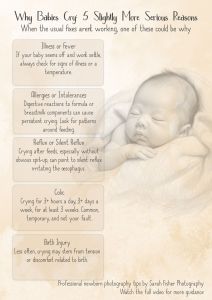
Colic
Colic has a specific definition: crying for three or more hours a day, three or more days a week, for at least three weeks, in an otherwise healthy baby. It’s exhausting and distressing, but it is temporary. It doesn’t mean anything is wrong with baby, and it doesn’t mean you’re doing anything wrong. It does pass, even when it feels like it won’t.
Birth Injury or Undetected Physical Discomfort
This one is less common, but worth knowing about. Sometimes babies carry tension or discomfort from birth that isn’t immediately obvious. If you’ve worked through everything else and nothing explains the crying, it might be worth speaking to a specialist. Some parents find that a paediatric osteopath or chiropractor makes a difference. Always check credentials and get a GP referral if you’re unsure where to start.
Not every cry is a crisis. But understanding the full picture means you can feel more confident, less alone, and better placed to ask for help when you need it.
If you missed the earlier parts of this series, part one covers the most common everyday reasons babies cry, and part two looks at emotional and developmental causes.