
Many parents notice that when their baby becomes very tired, settling to sleep can suddenly become harder rather than easier. A baby who seemed happy a short time ago may become fussy, restless or difficult to calm.
This often happens because babies can become overtired, especially during the early months when their sleep patterns are still developing. Learning to recognise the signs can help parents respond earlier and create calmer sleep routines.

Why babies become overtired
Babies have much shorter wake periods than adults. During the first year, their bodies and brains are still learning how to balance sleep and wakefulness. When babies stay awake longer than they comfortably can, their bodies can release stress hormones that make it harder for them to relax and settle. This can lead to crying, restlessness or difficulty falling asleep. Overtiredness can happen for several reasons, including:
• staying awake too long between naps
• busy or stimulating environments
• developmental changes or growth spurts
• changes to routines
Even experienced parents occasionally miss the early signs, especially during busy days.
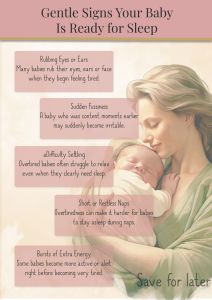
Common tired signals
Babies often show small cues when they are ready for sleep. Recognising these early signals can help parents settle their baby before overtiredness sets in. Common tired cues include:
• rubbing eyes or ears
• turning their head away from stimulation
• becoming quieter or less engaged
• fussiness or brief bursts of crying
• staring or losing focus
Some babies become very still when tired, while others become more active and unsettled. Every baby shows tiredness slightly differently.
Wake windows and timing
Many parents find it helpful to think in terms of wake windows, which simply means the amount of time a baby can comfortably stay awake between sleep periods. These times vary by age, but rough guides include:
• newborns: around 45–90 minutes
• younger babies: about 1–2 hours
• older babies: around 2–3 hours
Watching your baby’s cues is usually more helpful than strictly following the clock, but these ranges can offer a helpful starting point.
Helping babies settle
When a baby begins showing tired signals, keeping the environment calm can help them transition toward sleep.
Simple strategies include:
• dimming lights
• reducing noise and stimulation
• gentle rocking or cuddling
• a consistent pre-sleep routine
• quiet feeding or comfort
Babies often respond well to predictable routines because they begin to associate certain activities with rest.

A reassuring note for parents
Many parents worry that overtiredness means they have missed something important or done something wrong. In reality, it happens to almost everyone at some point. Baby sleep is not perfectly predictable, especially during the first year. Developmental changes, growth spurts and everyday life can all affect sleep patterns. With time, parents usually become more familiar with their baby’s cues and rhythms.
If you would like to explore baby sleep in more detail, you may also find these guides helpful:
Why Won’t My Baby Sleep? Understanding Baby Sleep in the First Year
Gentle Principles for Understanding Baby Sleep
Both explore common sleep patterns and offer reassurance about how baby sleep gradually develops during the first year.
Newborn Photography in East Grinstead
Newborn photo shoots are best when your baby is between 5 and 10 days old—this is when they’re at their sleepiest and curliest, perfect for capturing those beautifully serene images. To ensure you don’t miss out, I recommend booking while you’re still pregnant—we’ll set a provisional date for a week after your due date and adjust if needed once your baby arrives.
Your session takes place in my warm and cosy studio in Crawley Down, designed for your baby’s comfort. The shoot is relaxed, unrushed, and includes three digital images of your choice, all for £95. There’s no sales session—just a private online gallery where you can view and select your favourites at your own pace.