
Breastfeeding is often described as natural, but the science behind it is genuinely fascinating. Whether you breastfeed, bottle-feed, or do a bit of both, these facts aren’t about pressure. They’re just about how clever the human body can be.
Babies are born knowing what to do
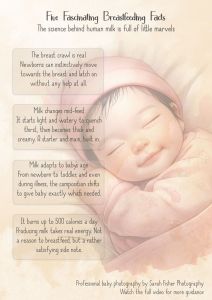
It’s called the breast crawl. A newborn, placed on their mum’s chest, can instinctively wriggle towards the breast and latch on without any guidance at all. Watching it happen is one of those things that stops you in your tracks.
Breastmilk changes during a feed
It doesn’t stay the same from start to finish. The milk at the beginning of a feed is lighter and more watery, which helps quench thirst. By the end, it’s thicker, creamier, and higher in fat. The body essentially serves a starter and a main course, without being asked.
Your milk adapts to your baby
Breastmilk isn’t one-size-fits-all. It shifts in composition as baby grows, from the early days of colostrum right through to toddlerhood. It even responds to illness, producing specific antibodies to help baby fight off whatever they’ve picked up. The body is paying attention.
Breastfeeding burns calories
Producing milk uses energy, somewhere between 300 and 500 calories a day. That’s not a reason to breastfeed, but it is a rather satisfying thing to know when you’re sitting up at 3am doing exactly that.
Twin magic
This one is worth pausing on. If feeding twins, the body can produce milk with different compositions for each baby, based on their individual needs. If one twin is unwell, the milk for that baby can carry different antibodies to help them recover. Two babies, one body, two tailored feeds.
Whatever feeding looks like for your family, I hope this gave you a moment to appreciate just how much the body quietly gets on with. It really is something.