
Once your baby starts babbling and waving, something is shifting. These small actions can look like nothing much, but they are the beginning of real conversation. Here is what is happening at this stage, and how you can support it.

Talking helps, even before they can reply
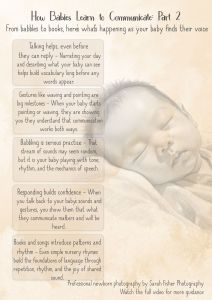
You do not need to wait for your baby to speak before talking to them. Narrating what you are doing, describing what they can see, and chatting through the routine of a nappy change or a feed all helps. Your baby is absorbing words, patterns, and the rhythm of language long before they can produce any of it themselves. There is no need to perform or use a particular voice. Just keep talking.
Gestures are a big step
When your baby starts pointing or waving, they are showing you something important. They understand that they can direct your attention, that communication goes in both directions, and that their signals will be responded to. Gestures often arrive before words and help pave the way for them. Waving back, following their pointing finger, and acknowledging what they are trying to tell you all reinforce that understanding.
Babbling is serious practice
It might sound like nonsense, but babbling is genuine speech preparation. Your baby is experimenting with sounds, trying out tone and rhythm, and working out how to move their mouth to produce different noises. The more you respond to it as though it means something, the more encouraged they are to keep going. Some parents find it helps to babble back, or simply to reply as if a full conversation is taking place.
Responding builds confidence
Every time you respond to your baby’s sounds or gestures, you are showing them that communication works. They make a sound, you react, and they learn: I am being heard. This back-and-forth, even when it is entirely pre-verbal, builds the confidence and motivation to keep communicating. It is one of the most natural things you can do, and one of the most valuable.
Books and songs
Reading simple stories and singing nursery rhymes introduce rhythm, repetition, and vocabulary in a way that is easy and enjoyable. Your baby does not need to understand the words for it to be useful. The patterns, the sounds, and the shared experience all contribute to building strong language foundations. Even the same short book read over and over again is doing more than it might seem.
Supporting your baby’s communication is mostly about paying attention and responding. Every babble, every point, every wave is your baby practising. All you have to do is show up and talk back.