
Pregnancy has always attracted strong opinions. These days most of them come with scientific backing, but throughout history, expectant mothers were guided by superstition, folklore, and the best guesses of whoever happened to be in the room. Here are five more curious beliefs that people once swore by.

Don’t look at the moon
It was once believed that gazing at the moon during pregnancy could “moonstrike” your baby, leaving them destined for madness or unpredictable behaviour. Some even feared that moonlight could physically mark the baby in some way. Pregnant women in certain cultures were advised to avoid going outside at night altogether, just to be safe.
Cravings predict gender
Sweet cravings meant you were having a girl. Salty or sour? A boy was on the way. These ideas were passed down through generations as old wives’ tales, and some versions also claimed the shape or position of your bump could give the game away. Completely unscientific, of course, but people are still guessing by cravings today.
No baths after birth
In some traditions, new mothers were told not to bathe for days, or even weeks, after giving birth. The belief was that water could seep into the body and cause serious illness or worse. Dry cloths were considered the only safe option. It is worth remembering that this was long before germ theory, but it was still quite an ask.
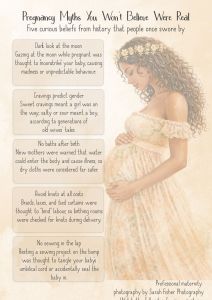
Avoid knots at all costs
Knots were thought to symbolise restriction, which meant anything tied, braided, or fastened could “bind” the birth and slow things down. Birthing rooms were checked for tied curtains, laced garments, and knotted hair. Midwives would sometimes go through the room before labour began, undoing anything they could find.
No sewing in the lap
Resting a sewing project on the bump was considered dangerous. The belief was that the thread could somehow tangle your baby’s umbilical cord, and that closing a seam might accidentally “seal in” the baby. Needlework had to wait until after the birth.
It is easy to smile at these ideas now. But they came from a genuine desire to protect mothers and babies at a time when so much about pregnancy was still unknown. The folklore is different; the care behind it is not.